From 9 - 12 October 2023 two NIOZ colleagues boarded the Italian tug Lione to recover, service and re-deploy the Mediterranean sediment-trap mooring that is part of a unique time series of Saharan dust collection since the late 1980's. The time series was initiated by prof dr Gert de Lange (Utrecht University) who was particularly interested in the exceptional geochemistry of so-called brine basins, mostly located in Libyan parts of the Mediterranean Sea. In addition, these sediment traps also collected deposition of Saharan dust. The priceless time series (> 30 years of samples, waiting to be converted into data) is now being studied in the project: “Unravelling seasonal dust-induced productivity changes in the Mediterranean Sea” and the sediment-trap time series between the islands of Sicily (Italy) and Crete (Greece) is continued with so-called ‘ships of opportunity’. In this blog you can read how we recovered, serviced and re-deployed the sediment trap from aboard the tug Lione, sailing from the harbour of Augusta, Sicily.
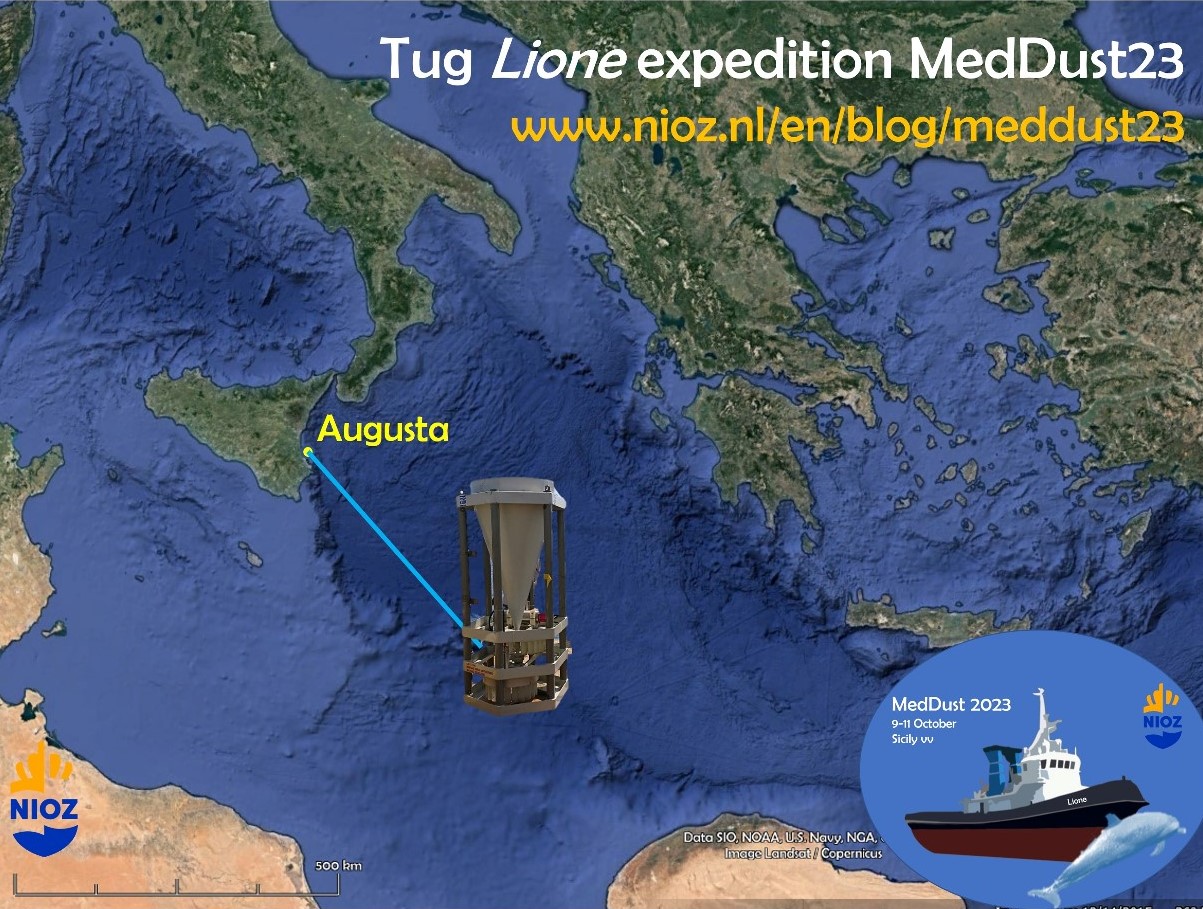
Tug Lione is used to operate in Italian waters mostly, assisting larger vessels with maneuvering inside ports and delivering large fenders to protect ships and quays. In addition, the crew is trained and highly skilled in environment protection, foremost the cleaning up of oil spills. Scientific work is obviously new to the crew and we enjoy explaining what our equipment is for and why we are doing this study. She is not a big vessel but very cosy! We share a cabin with the four of us.
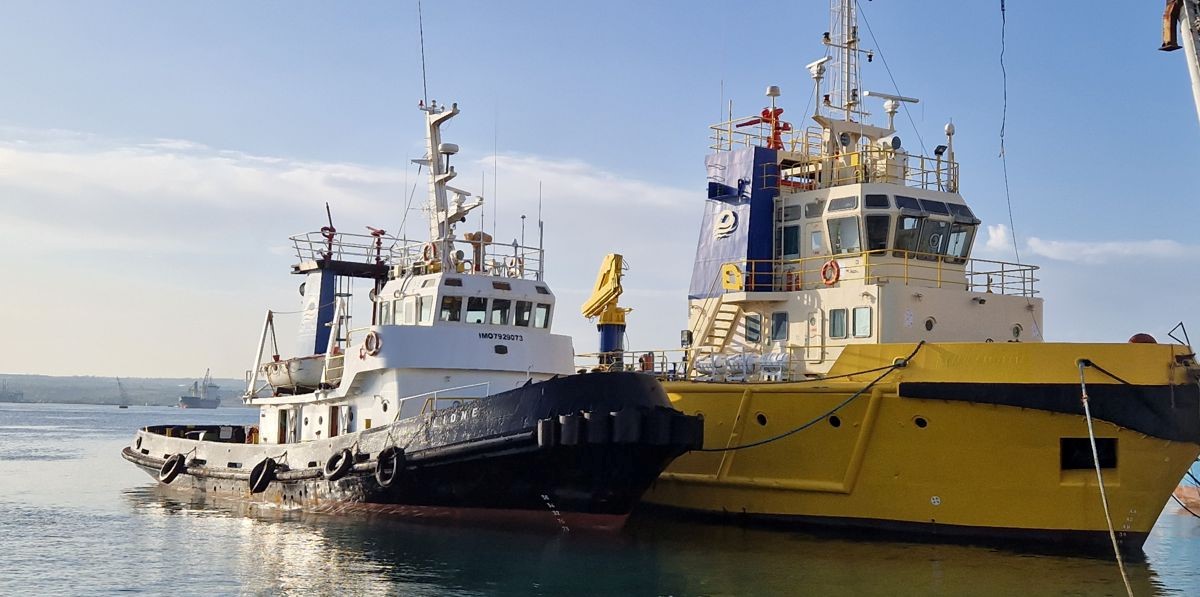
Tug Lione in the harbour of Port Augusta, Sicily, lying next to her big sister.
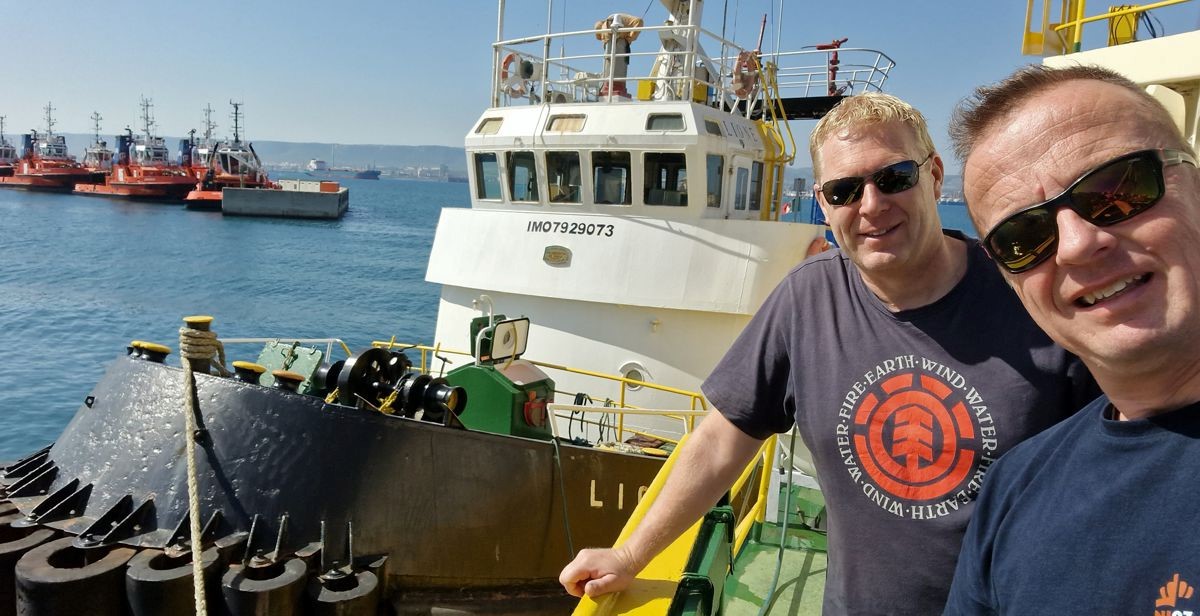
Tug Lione our home for the next few days.
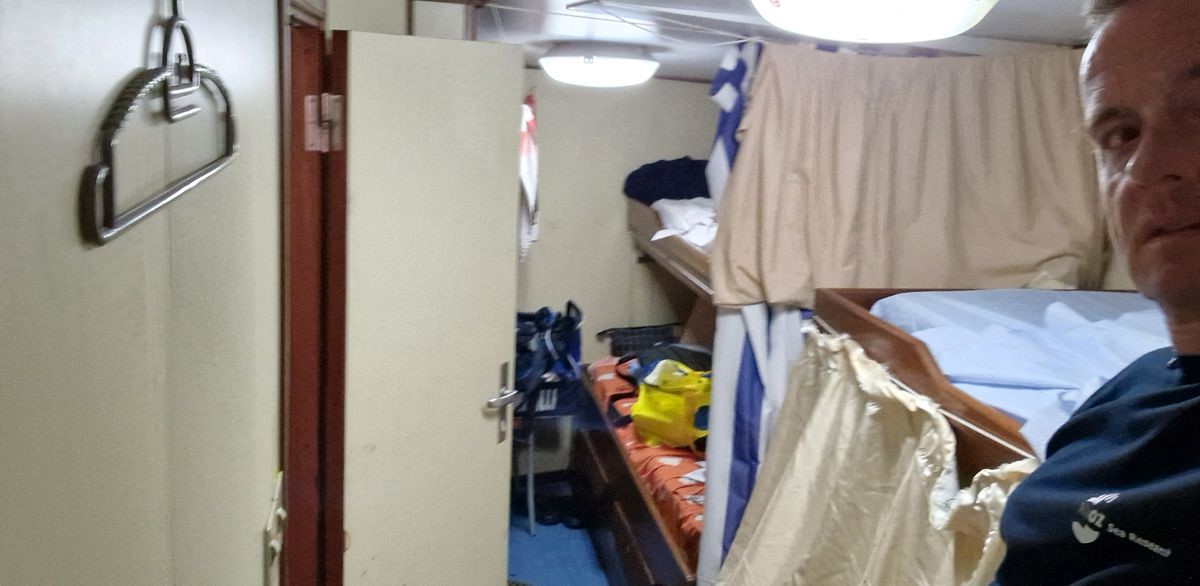
Peak into the well-climatised cabin
We leave the port of Augusta under nicely calm conditions; the outer wall of the harbour keeps swell and waves out.
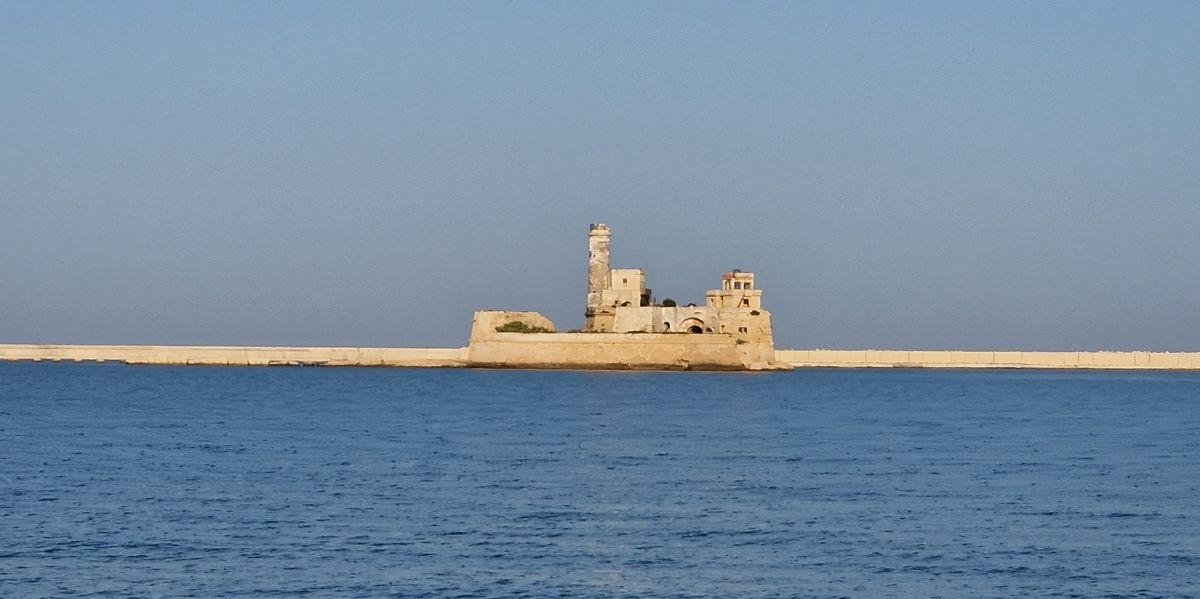
The outer wall of Port Augusta, including the medieval constructions meant to welcome visitors
Even outside the harbour wall there is hardly any wind a only a little bit of swell. Only because the vessel is relatively low, the waves still make it onto the deck.
While we sail out of Augusta, we are treated to a very nice and dusty sunset over Sicily.
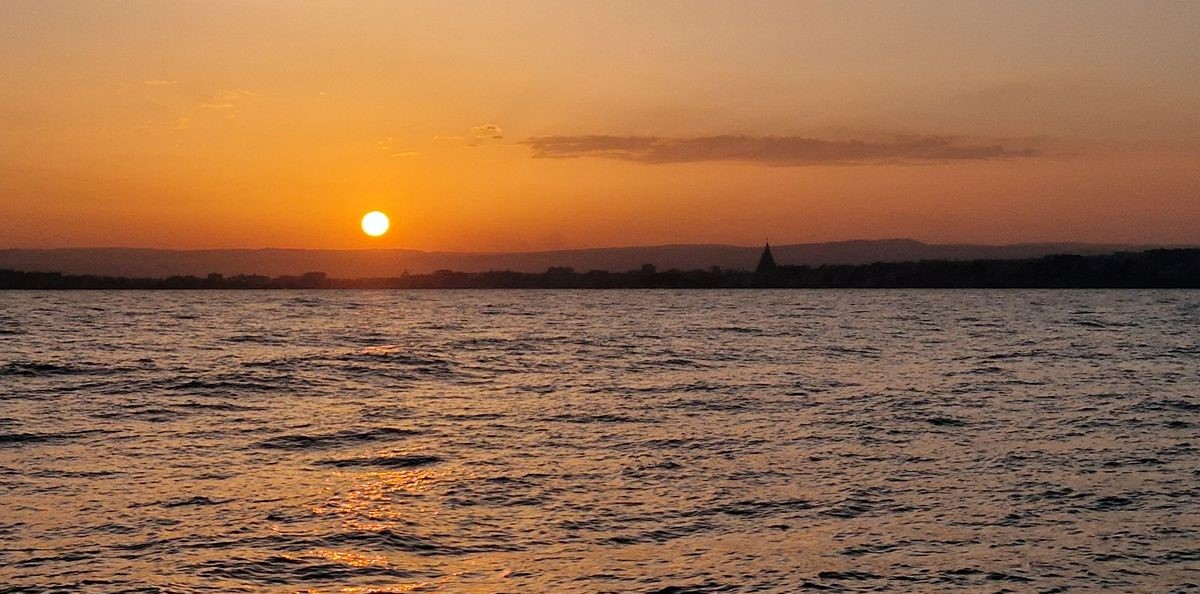
Sunset over Sicily, are these red skies caused by Saharan dust?
On our way to the trap site in the southeastern corner of the Italian EEZ, between the islands of Sicily (Italy) and Crete (Greece), we prepare for the recovery and re-deployment of the sediment-trap mooring. New bottles have to be prepared with densified and clean seawater and some spare parts of the mooring (like the top triangle frame at the front of this picture) will be replaced, next to being provided with a new satellite beacon.
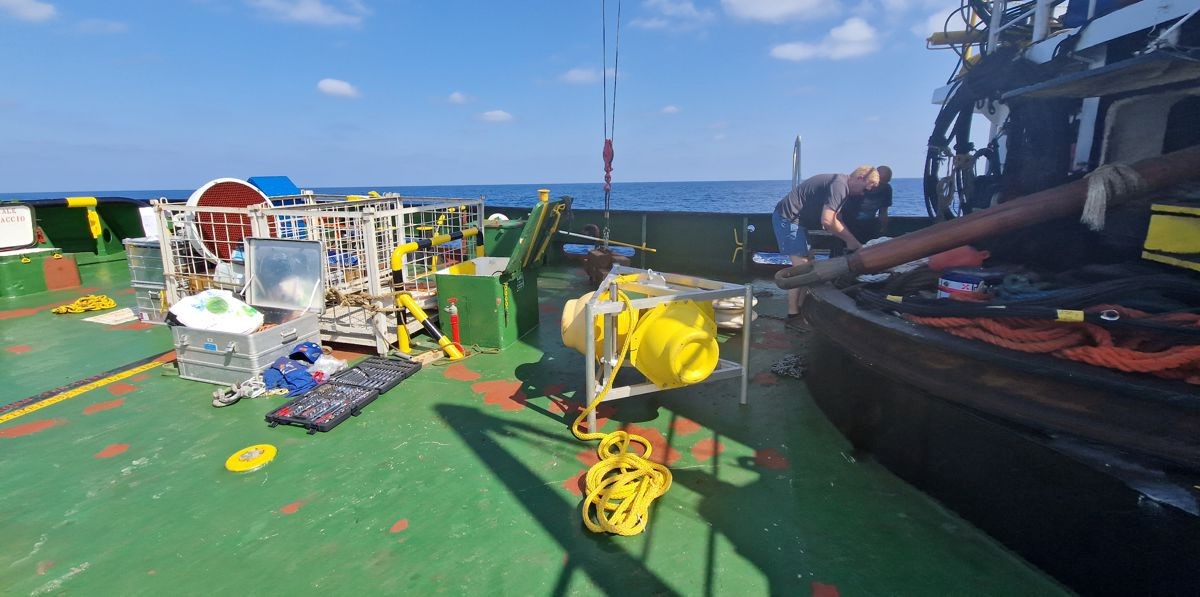
Our equipment and materials on deck of Tug Lione; we prepare for the mooring operations.
The most exciting part of a mooring recovery is always: will she come up when give the release command? Fortunately, the communication to the releases work very well and soon we see decreasing numbers on the distance display, meaning that the mooring is on her way to the sea surface!
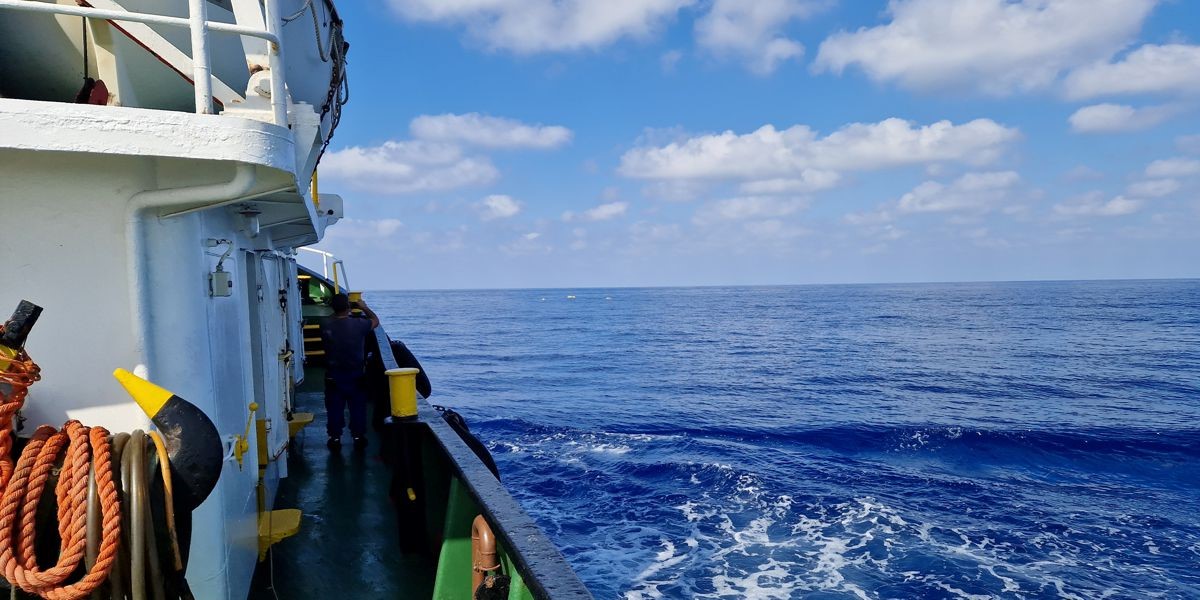
With calm conditions like this, the top floats of the mooring are spotted easily.
With calm conditions like these, and the excellent maneuvering of the officers on the bridge, the operations run really smoothly! Within half an hour after the release command was given, the mooring surfaced and we could recover her swiftly with the deck crane.
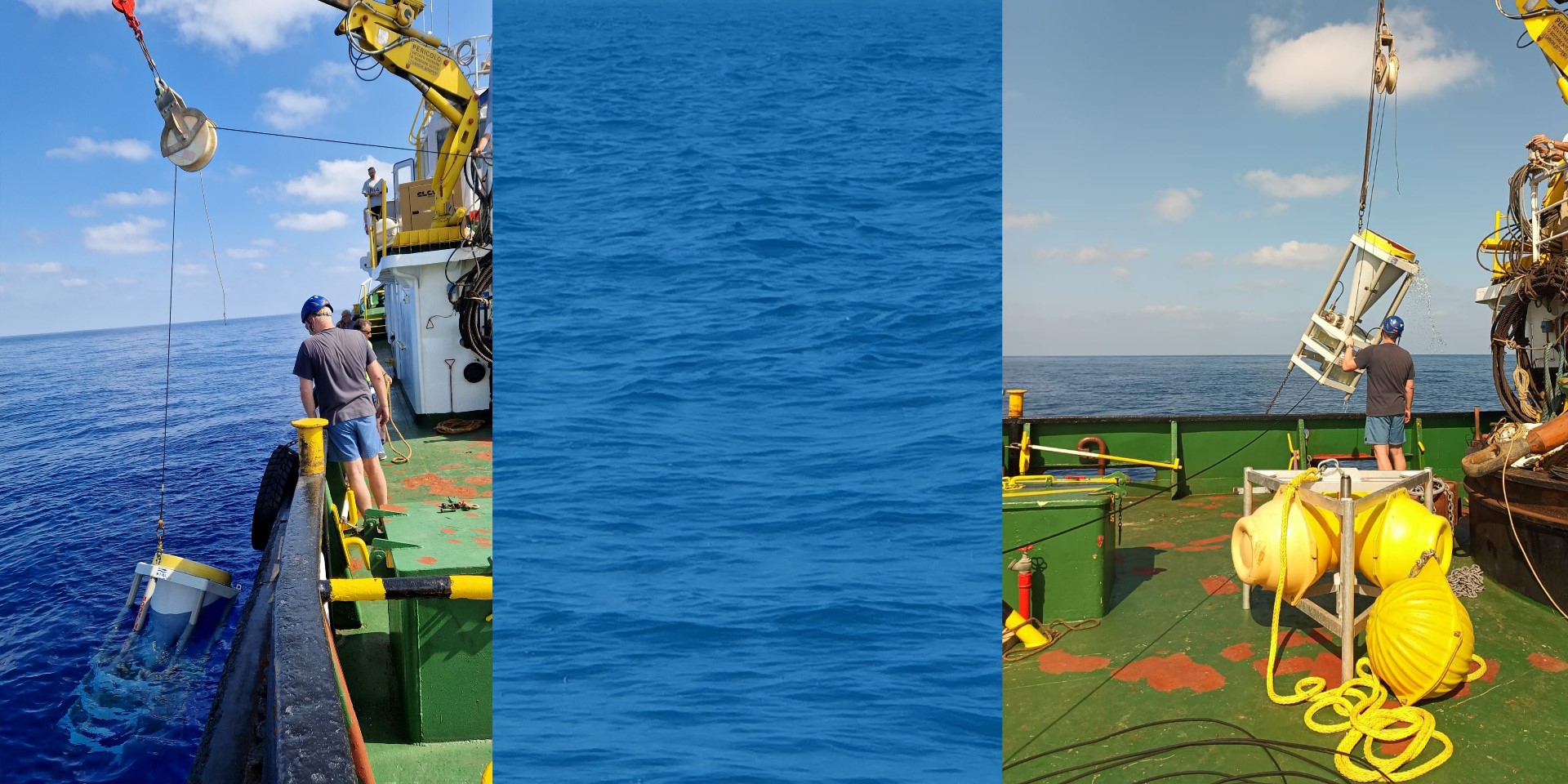
Clear waters nicely show the sediment trap, which is hoisted on board smoothly and securely.
Below you see the lower carrousel of the sediment trap with the bottles containing material. Each bottle has been positioned below the funnel for 10 days, collecting all material (including dust particles, organic matter produced by plankton in the surface waters and fossil remains of phytoplankton) settling towards the seafloor.
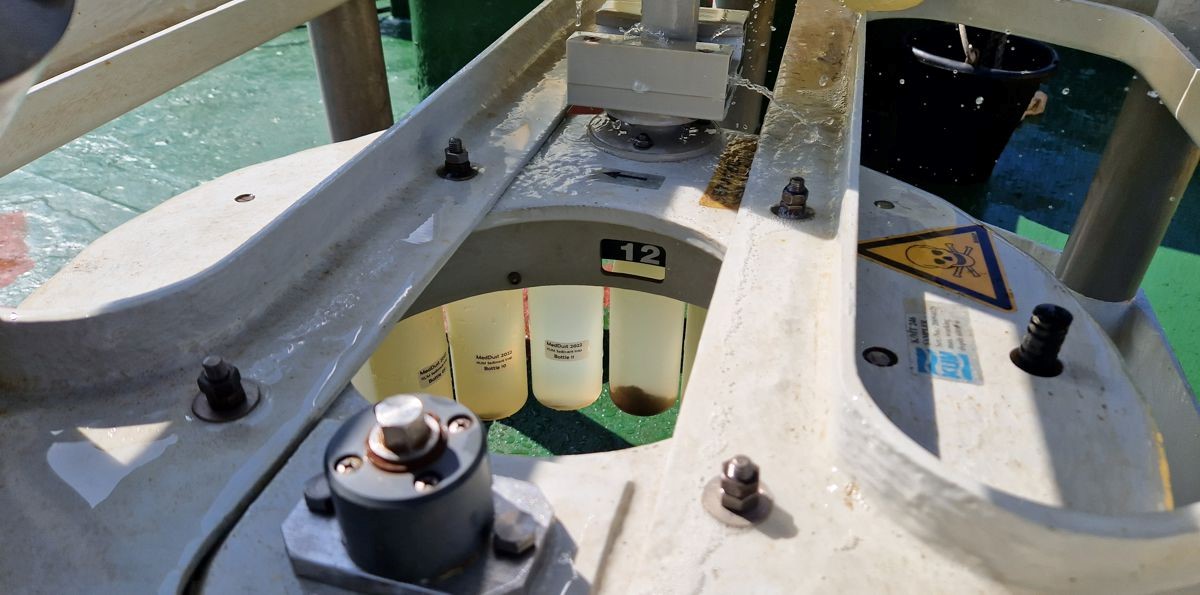
Close-up view on the sediment-trap carrousel with the bottles containing some material collected over a time period of 10 days.
The tug has a pretty impressive winch to spool arm-thick cables that can pull big ships. However, for the dyneema line that we are using for the mooring, and under such a calm sea state, the spooling can be done by hand.
After replacing all the bottles of the sediment trap and all the electronics that steer the carrousels, checking all the moving parts and floats, the mooring is ready to go into the water for another year of sediment collection. The sea state is so amazingly calm that we can deploy her really easily.
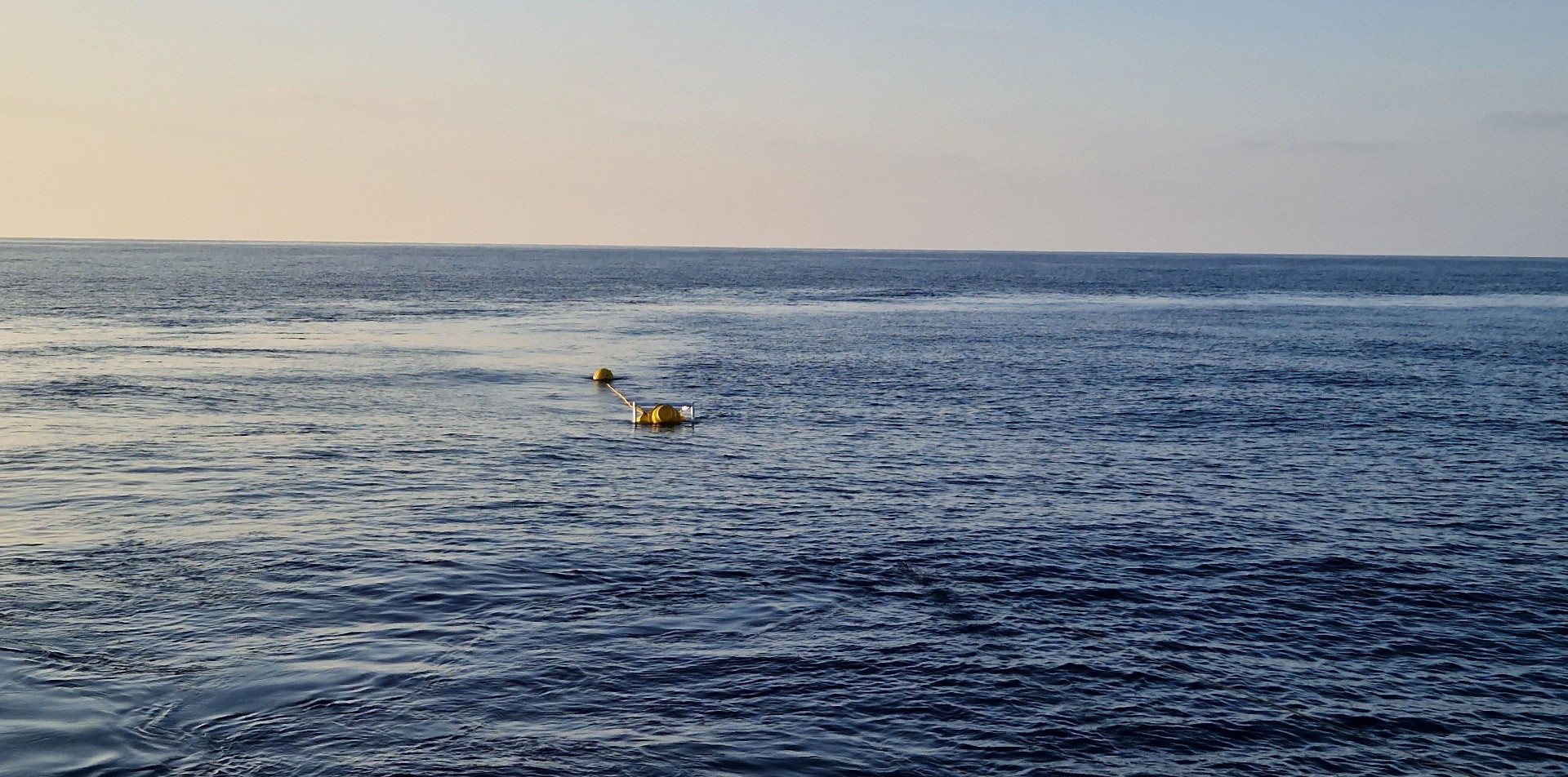
An amazingly calm sea state allows us to see the mooring's top floats for miles.
The Lione crew is not only very sklled and experienced, they are also very helpful and clearly enjoy this scientific mission. Here you see AB’s Pepe, Salvatore, Antonio, and Valentino, chief engineer Hugo and bosun Pepe who took really great care of us: grazie mille!
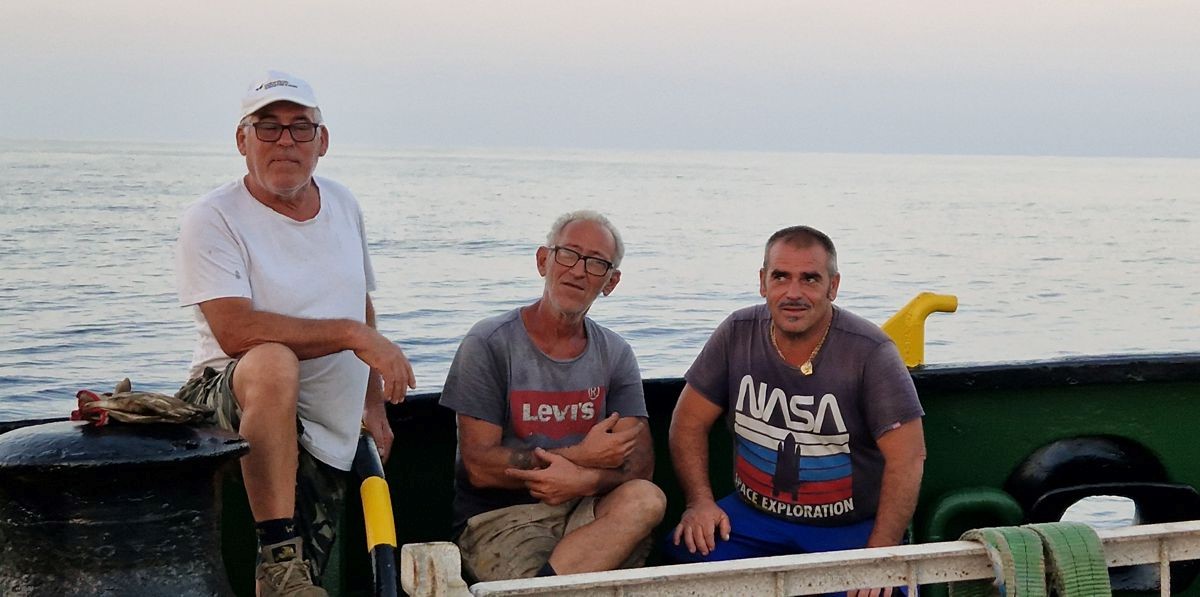
Tug Lione crew.
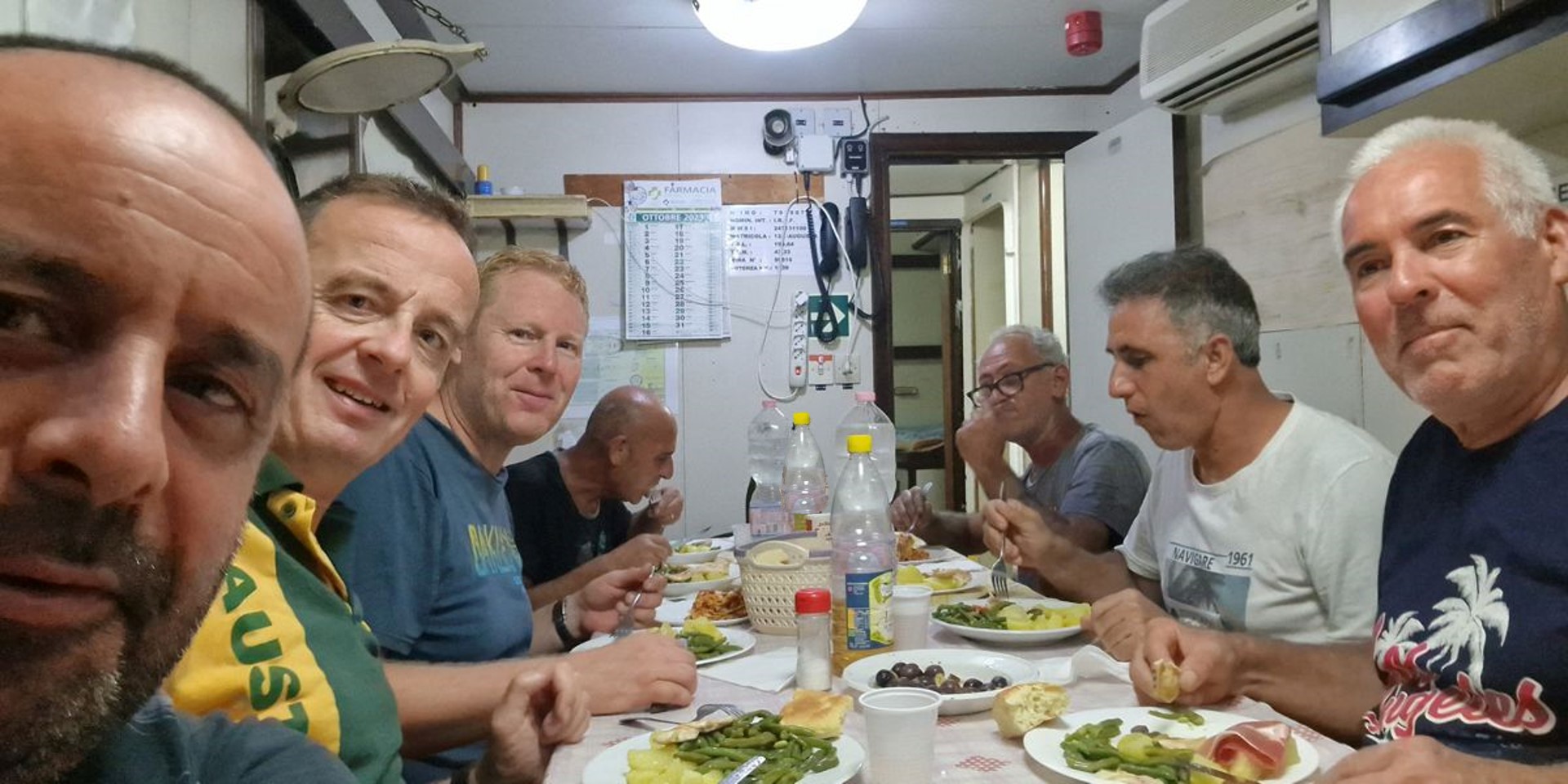
Leave it to the Italians to spoil us with amazing food!
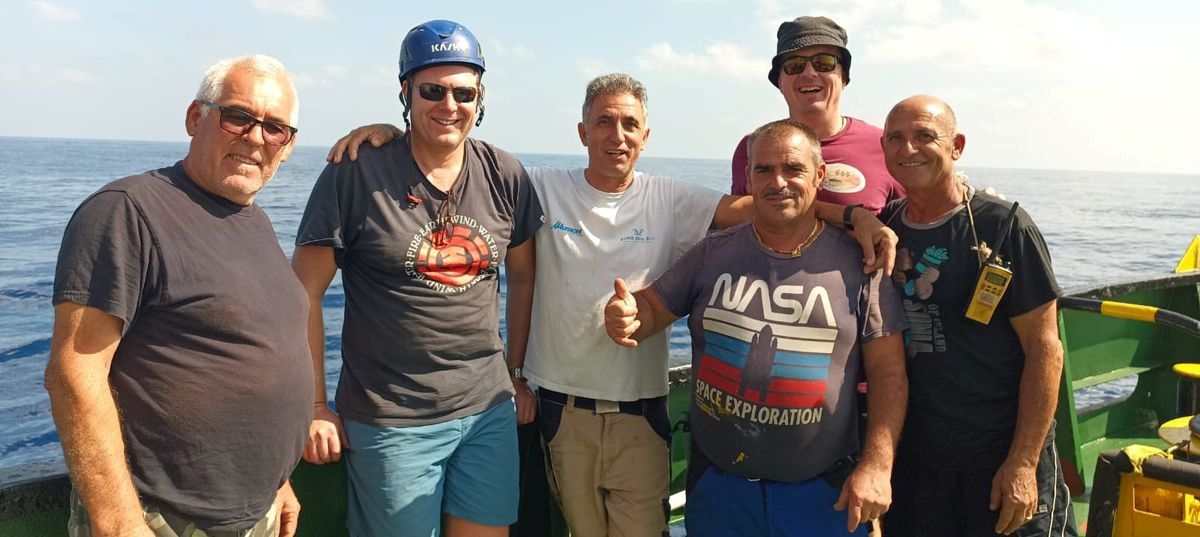
A picture says more than thousand words; it is obvious that we had a great time: many thanks again!
2023 - Med Dust 2023 - tug Lione
2022 - Peru 2022 field trip
2022 - Med Dust 2022 - tug Macistone
2021 - SIPA - FS Maria S Merian MSM104
2021 - Dust 2021 - RV Pelagia 64PE482
2019 - Dust 2019 - RV Pelagia 64PE464
2018 - Med Dust - RV Pelagia 64PE443

 +31 222 369 405 (NIOZ)
  jbstuut@nioz.nl